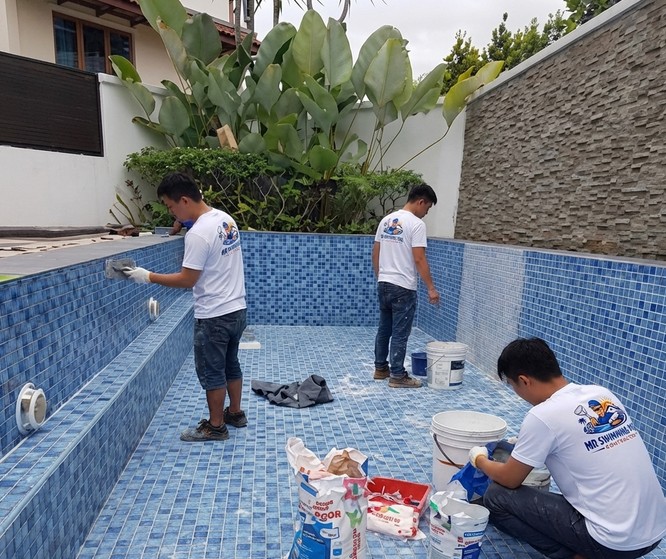
Types of Pool Tiles
Choosing the right tiles for your swimming pool is one of the most important decisions you will make during construction or renovation. The tile you select affects not only the pool's appearance but also its durability, safety, and long-term maintenance costs. Here are the main types available in Malaysia:
Ceramic Tiles: The most budget-friendly option and widely available in Malaysia. Ceramic tiles come in a vast range of colours and patterns. However, standard ceramic tiles have a higher water absorption rate, making them less durable for fully submerged applications. For pools, always choose ceramic tiles rated for pool use with a water absorption rate below 3%.
Porcelain Tiles: A step up from ceramic, porcelain tiles are fired at higher temperatures, resulting in a denser, harder tile with water absorption rates below 0.5%. They are exceptionally durable, resistant to chemicals, and available in stunning finishes that mimic natural stone. Porcelain is our most recommended option for Malaysian pool owners who want the best balance of quality and value.
Glass Mosaic Tiles: The premium choice for pool finishes. Glass mosaics create a luminous, jewel-like effect in the water that no other material can match. They are non-porous, completely waterproof, and resistant to chemicals and UV. The small tile size (typically 20x20mm or 25x25mm) allows for intricate designs, patterns, and even murals on the pool floor.
Natural Stone Tiles: Granite, slate, and travertine can be used in pools for a luxurious, natural aesthetic. However, natural stone requires careful selection and treatment. It must be sealed properly and is generally more suited to pool surrounds and waterline features rather than full submerged surfaces.
"In our experience, porcelain tiles offer the best long-term value for 80% of Malaysian pool projects. Glass mosaics are worth the premium for feature walls, waterline bands, and spa areas where visual impact matters most."
Durability Factors
Not all tiles perform equally in a pool environment. When selecting pool tiles for Malaysia's climate, consider these critical durability factors:
- Water absorption rate: The single most important specification. Pool tiles must have a water absorption rate below 3% (porcelain: below 0.5%, glass: 0%). Higher absorption means water penetrates the tile body, causing cracking, delamination, and discolouration over time.
- Chemical resistance: Pool water contains chlorine, acid, and other chemicals. Tiles must withstand continuous chemical exposure without fading, etching, or surface degradation. Glass and porcelain excel here.
- UV resistance: Malaysian pools receive intense UV radiation year-round. Low-quality tiles may fade or discolour within a few years. Choose tiles with through-body colour or UV-stable glazes.
- Slip resistance: For steps, shallow areas, and entry points, tiles must have adequate grip when wet. Look for tiles rated R10 or R11 on the slip resistance scale for pool applications.
- Frost resistance: While not relevant for Malaysia's temperatures, this rating indicates overall tile quality and density. Frost-resistant tiles are simply better-made tiles.
Cost Comparison
Understanding tile costs helps you budget effectively. Here are typical price ranges for pool tiles in Malaysia (per square metre, material only, as of 2026):
- Ceramic pool tiles: RM 25 - RM 80 per sqm. Affordable but with a shorter lifespan in submerged conditions (8-12 years before potential issues).
- Porcelain pool tiles: RM 60 - RM 180 per sqm. Excellent value considering their 15-25 year lifespan in pools. Mid-range porcelain at RM 80-120 per sqm is the sweet spot.
- Glass mosaic tiles: RM 150 - RM 500+ per sqm. Premium pricing but delivers unmatched aesthetics and a 25+ year lifespan. Imported Italian and Spanish glass mosaics sit at the higher end.
- Natural stone: RM 100 - RM 400 per sqm. Prices vary enormously depending on the stone type, finish, and source. Factor in additional sealing costs.
Installation labour typically adds RM 30-60 per sqm depending on tile size, pattern complexity, and pool geometry. Smaller tiles like glass mosaics cost more to install due to the precision required.
"Don't choose tiles based on upfront cost alone. A porcelain tile at RM 100 per sqm that lasts 20 years costs RM 5 per sqm per year. A cheap ceramic at RM 30 per sqm that needs replacing after 8 years costs RM 3.75 per sqm per year -- but the replacement labour doubles the true cost."
Installation Tips
Even the best tiles will fail if installed incorrectly. Pool tile installation is a specialist skill that differs significantly from standard tiling. Here are the key considerations:
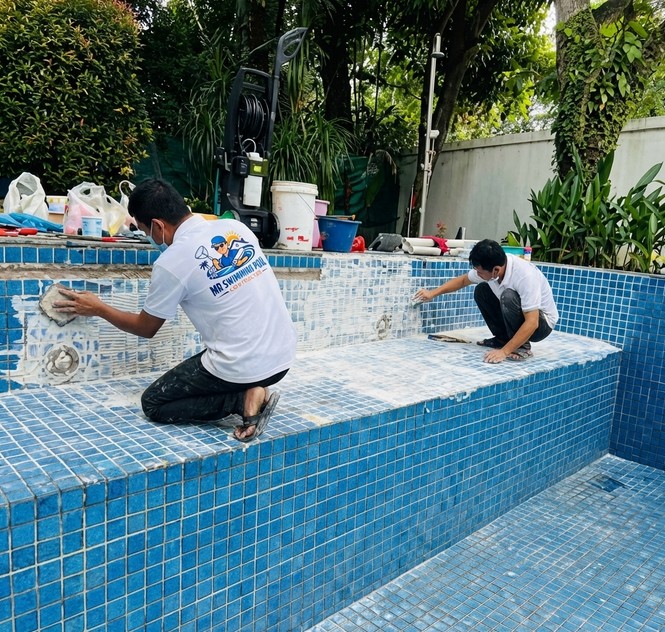
- Use pool-specific adhesive: Standard tile adhesive will fail underwater. Pool tiles must be set with flexible, waterproof adhesive rated for submerged applications. In Malaysia, we use epoxy-based or modified polymer adhesives designed for pool environments.
- Proper substrate preparation: The pool shell must be fully cured (minimum 28 days for new concrete), clean, and free of laitance. Apply a waterproof membrane before tiling to create an additional barrier.
- Grout selection matters: Use epoxy grout for pool applications. While more expensive and harder to work with, epoxy grout is waterproof, chemical-resistant, stain-proof, and far more durable than cement-based grout. It does not crack, shrink, or harbour bacteria.
- Expansion joints: Include expansion joints at all corners, changes in plane, and every 3-4 metres along long runs. Malaysian pools experience thermal expansion daily, and without proper joints, tiles will crack or pop off.
- Full-bed application: Ensure 100% adhesive coverage on the back of each tile. Hollow spots behind tiles trap water and lead to delamination. A professional installer will "back-butter" each tile in addition to applying adhesive to the substrate.
Tile Maintenance
Once your tiles are installed, proper maintenance ensures they look beautiful and perform well for decades:
- Weekly waterline cleaning: The waterline is where oils, sunscreen, and minerals accumulate, forming a visible ring. Brush the waterline weekly with a pool tile brush. For stubborn buildup, use a calcium and scale remover formulated for pool tiles.
- Maintain proper water chemistry: Water that is too acidic (low pH) will etch grout and can damage tile glazes. Water that is too alkaline promotes calcium scaling on tile surfaces. Keep pH between 7.2-7.6 to protect your tiles.
- Address loose tiles immediately: A single loose tile allows water behind the tiled surface, which can cause surrounding tiles to fail in a cascade. Re-bond loose tiles promptly using pool-grade adhesive.
- Annual grout inspection: Even epoxy grout can develop minor issues over years. Inspect grout lines annually for cracks, erosion, or discolouration. Address issues early to prevent water infiltration.
- Avoid abrasive cleaning: Never use steel wool, wire brushes, or acidic household cleaners on pool tiles. These damage glazes and protective surfaces, making tiles more vulnerable to staining and chemical attack.
With proper tile selection and maintenance, your pool tiles should last 15-25 years or more, maintaining their beauty and structural integrity throughout.

Have Questions About Pool Tiles?
Our specialists can help you choose the perfect tiles for your pool. WhatsApp us for expert advice.
WhatsApp Us Now