Tropical Climate Challenges
Malaysia's equatorial climate presents a unique set of challenges for pool owners that simply do not exist in temperate regions. Understanding these challenges is the first step toward maintaining a healthy, inviting pool throughout the year.
The key factors that make Malaysian pool maintenance different:
- Year-round high temperatures (27-35 degrees Celsius): Warm water is a breeding ground for algae and bacteria. What takes weeks to develop in cooler climates can happen in days here.
- Intense UV radiation: Malaysia sits near the equator, meaning UV exposure is extremely high. Chlorine degrades up to 90% faster under direct tropical sunlight compared to northern European conditions.
- Heavy rainfall: Monsoon seasons bring torrential downpours that dilute pool chemicals, alter pH levels, and wash debris, soil, and organic matter into the pool.
- High humidity (75-95%): Elevated humidity slows evaporation cooling but promotes mould and mildew growth on surrounding decking and equipment.
- Tropical vegetation: Palm trees, frangipani, and other local plants shed leaves, flowers, and pollen continuously, adding organic load to the pool.
"A pool in Kuala Lumpur requires approximately 30% more chemical treatment and 50% more frequent servicing than an identical pool in Sydney, Australia -- purely due to climate differences."
Weekly Maintenance Checklist
Consistency is the cornerstone of pool maintenance. Following a structured weekly routine prevents small issues from becoming expensive problems. Here is the checklist we recommend to every pool owner in Malaysia:
- Test water chemistry (twice weekly): Check pH (ideal: 7.2-7.6), free chlorine (1-3 ppm), and total alkalinity (80-120 ppm). Use a quality liquid test kit rather than cheap test strips for accuracy.
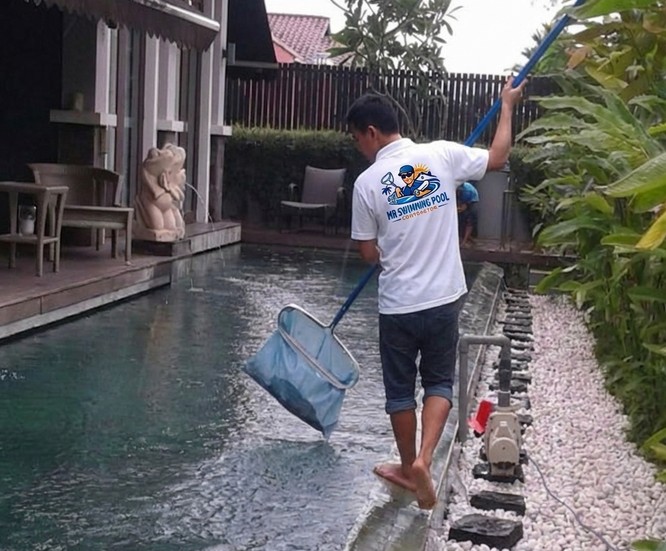
- Skim the surface daily: Remove floating leaves, insects, and debris before they sink and decompose. A few minutes each morning makes a significant difference.
- Brush walls and floor (weekly): Focus on corners, steps, behind ladders, and the waterline where algae first takes hold.
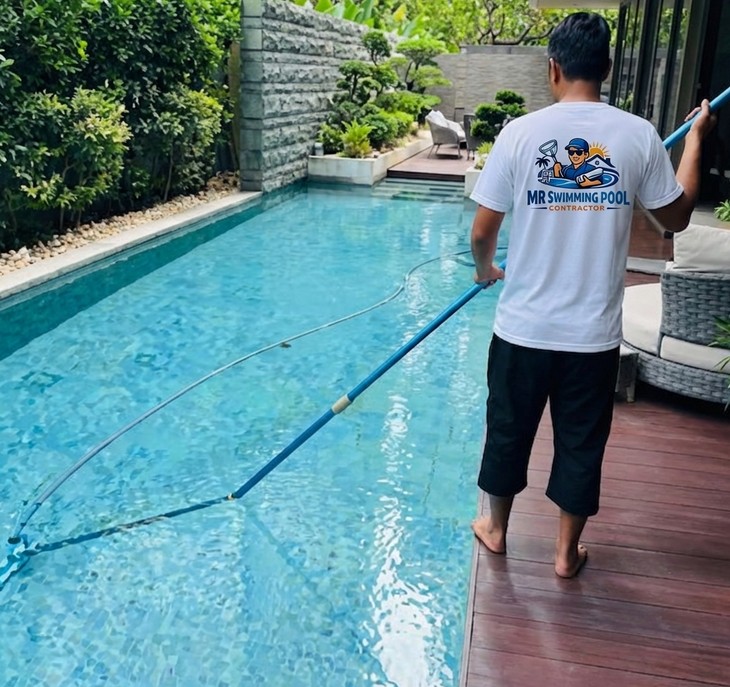
- Vacuum the pool floor (weekly): Either manually or with an automatic pool cleaner. Pay attention to dead spots where circulation is weak.
- Clean skimmer and pump baskets (twice weekly): Full baskets reduce flow rate and strain the pump motor.
- Check filter pressure (weekly): Backwash or clean when pressure reads 8-10 PSI above the clean starting pressure.
- Inspect water level (weekly): Maintain the water level at the midpoint of the skimmer opening for optimal skimming action.
- Run the pump 10-12 hours daily: In Malaysia's heat, the entire pool volume should be circulated at least twice per day.
Chemical Balance Guide
Getting your water chemistry right in Malaysia's climate requires understanding how tropical conditions affect each parameter. Here is your essential chemical guide:
pH Level (7.2-7.6): Malaysian rain is slightly acidic (pH around 5.5-6.0), which means heavy rainfall will push your pool pH downward. After any significant rain event, test and adjust pH immediately. Low pH causes corrosion of equipment, etching of plaster surfaces, and skin irritation.
Free Chlorine (1-3 ppm): The single most important sanitiser for Malaysian pools. Due to intense UV, unstabilised chlorine can be depleted within hours. Use cyanuric acid (stabiliser) at 30-50 ppm to protect chlorine from UV degradation. Consider using granular dichlor or trichlor tablets, which contain built-in stabiliser.
Total Alkalinity (80-120 ppm): Acts as a pH buffer. Proper alkalinity prevents pH from swinging wildly after rain or chemical additions. Adjust alkalinity first, then fine-tune pH.
- Calcium Hardness (200-400 ppm): Prevents water from becoming aggressive and dissolving grout, plaster, and equipment. Malaysian tap water varies significantly by region -- always test before filling.
- Cyanuric Acid (30-50 ppm): Essential in Malaysia. Without stabiliser, you will use three to four times more chlorine. However, too much CYA (above 80 ppm) reduces chlorine's effectiveness, requiring a partial drain and refill.
- Phosphates (below 300 ppb): Phosphates are algae food. Malaysian pools accumulate phosphates from garden runoff, rain, and decomposing plant matter. Use a phosphate remover quarterly.
"Balance your pool chemicals in this order: alkalinity first, then pH, then sanitiser. Trying to adjust pH without proper alkalinity is like building a house without a foundation."
Equipment Care
Your pool equipment works harder in tropical conditions. Proper care extends equipment lifespan significantly and prevents sudden failures that leave your pool vulnerable.
- Pump motor: Ensure adequate ventilation around the pump housing. Malaysian heat combined with motor heat can cause overheating. Clear any obstructions from the pump's air vents and keep the area around the pump clean and dry. Listen for changes in operating sound -- early detection of bearing wear saves the entire motor.
- Sand filter: Replace filter sand every 3-5 years. In Malaysia's conditions, sand becomes rounded and less effective faster. Backwash weekly or when pressure rises 8-10 PSI above baseline. Consider a deep chemical clean of the sand bed every 6 months using a filter cleaner product.
- Salt chlorinator (if applicable): Inspect the cell every 3 months for calcium buildup. Malaysian water hardness varies, but most areas require regular acid cleaning of the cell plates. Replace the cell every 3-5 years depending on usage.
- Automated controllers: Keep sensors clean and calibrated. Tropical humidity can affect probe readings. Replace pH and ORP probes annually for accurate dosing.
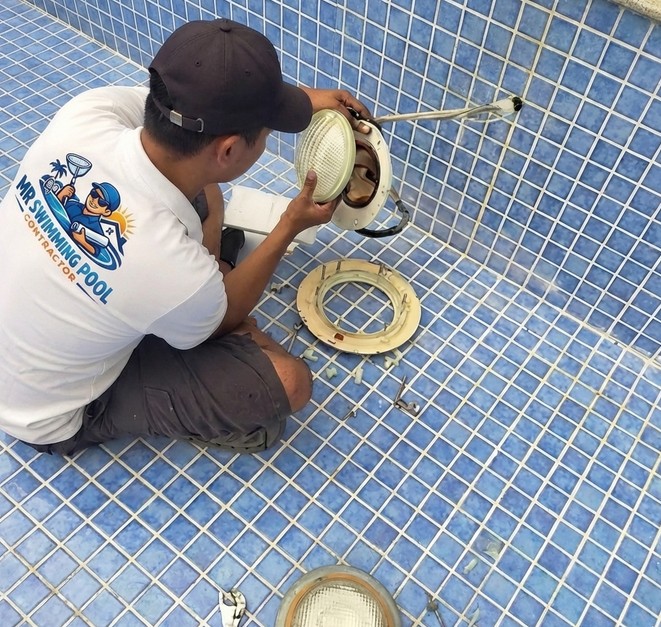
- Pool lights: Check seals and gaskets annually. Tropical UV degrades rubber seals faster, and a failing light niche seal can become a leak point.
Seasonal Tips for Malaysian Pools
While Malaysia does not have the four traditional seasons, we do have distinct weather patterns that affect pool care:
Northeast Monsoon (November - March): This is the wet season for the east coast and parts of Peninsular Malaysia. Heavy, sustained rainfall significantly dilutes pool chemicals and introduces contaminants.
- Increase chemical testing to daily during heavy rain periods
- Keep a supply of shock treatment on hand for post-storm recovery
- Consider a pool cover if the pool is not in regular use during monsoon weeks
- Check and clear drainage around the pool to prevent flooding and soil washout
Southwest Monsoon (May - September): Drier but hotter conditions. Increased evaporation and UV intensity put extra demand on chlorine levels.
- Top up water levels more frequently
- Increase stabiliser (CYA) monitoring to protect chlorine
- Run the pump for longer hours to ensure adequate circulation in warmer water
- Treat for algae proactively with a maintenance dose of algaecide
Inter-monsoon periods (April and October): These transitional months bring unpredictable thunderstorms. Be prepared for sudden changes in pool chemistry and maintain a well-stocked chemical supply.

Have Questions About Pool Maintenance?
Our certified pool specialists are ready to help you keep your pool in perfect condition year-round.
WhatsApp Us Now