1. Visible Cracks in the Pool Shell
Cracks in your pool's structure are among the most serious signs that professional repair is needed urgently. In Malaysia, where the ground can shift due to heavy monsoon rains and varying soil moisture levels, even minor structural cracks can quickly escalate into major problems.
There are two main types of cracks to watch for:
- Surface cracks (spider cracks): These are thin, web-like cracks in the plaster or gelcoat finish. While cosmetic in nature, they can allow water to seep behind the surface layer and cause delamination over time.
- Structural cracks: These run deeper into the concrete or gunite shell and typically indicate foundation movement. If you can fit a coin edge into the crack, it is structural and requires immediate professional attention.
Left unrepaired, structural cracks lead to water loss, soil erosion around the pool, and potentially catastrophic failure. A professional will assess whether the crack requires patching, resurfacing, or more extensive structural repair.
"We've seen cases where a small crack left unattended for six months turned into an RM 15,000 repair job. Early intervention could have fixed it for under RM 2,000."
2. Water Level Dropping Unexpectedly
It is normal for a pool in Malaysia to lose some water to evaporation -- typically 3 to 7 millimetres per day depending on sun exposure and wind. However, if you are topping up your pool more frequently than usual or notice the water level dropping more than 1 centimetre per day, you likely have a leak.
Common causes of pool leaks include:
- Cracked pool shell or deteriorated joints
- Failed pipe connections underground
- Worn skimmer or return fitting gaskets
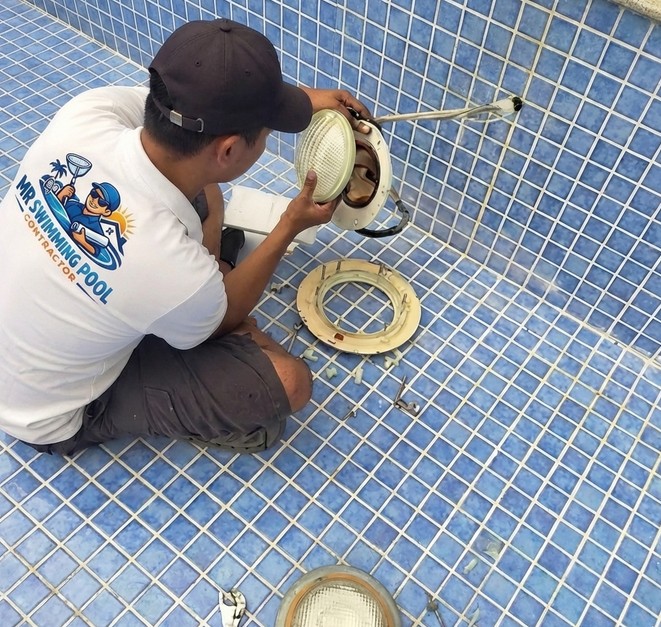
- Damaged light niches or conduit seals
- Broken or separated plumbing lines
A simple bucket test can help you determine whether water loss is from evaporation or a genuine leak. Place a bucket filled with pool water on the pool step and mark both the pool water level and bucket water level. After 24 hours, compare the difference. If the pool level has dropped more than the bucket, you have a leak.
Professional leak detection uses pressure testing and acoustic equipment to pinpoint the exact location without unnecessary excavation.
3. Pump Making Unusual Noises
Your pool pump should hum quietly during operation. When it starts making grinding, screeching, or rattling sounds, something is mechanically wrong and ignoring it will only lead to a more expensive breakdown.
Common pump noise causes and what they indicate:
- Grinding sound: Worn bearings that need replacement. Continuing to run the pump will burn out the motor.
- Screeching or squealing: Often a seized or failing motor bearing, or a dry mechanical seal creating friction.
- Rattling or vibrating: Loose mounting bolts, debris caught in the impeller, or a cracked volute.
- Cavitation (loud, harsh noise): The pump is starving for water -- possibly due to a clogged basket, blocked suction line, or an air leak in the plumbing.
"A pump bearing replacement costs around RM 300 to RM 500. Ignoring the noise until the motor burns out means a full pump replacement at RM 2,000 to RM 4,000."
4. Cloudy Water Despite Chemical Treatment
If you are dosing your pool with chemicals correctly but the water remains stubbornly cloudy, the problem likely goes beyond water chemistry. Persistent cloudiness after proper treatment often points to equipment or circulation issues that require professional diagnosis.
Potential underlying causes include:
- Filter failure: A cracked filter manifold, channelled sand bed, or torn cartridge allows fine particles to pass through and return to the pool.
- Insufficient circulation: A weak pump, partially blocked return lines, or dead zones in the pool design prevent proper water turnover.
- Calcium scaling in plumbing: Malaysia's water supply in certain areas has high calcium content, which builds up inside pipes and reduces flow rates over time.
- Biofilm formation: Resistant bacteria colonies form in plumbing lines and continuously reintroduce contaminants into the pool despite surface treatment.
A professional will test the water comprehensively, inspect the filtration system, and check circulation rates to identify the root cause rather than just treating symptoms.
5. Damaged or Loose Tiles
Pool tiles serve both an aesthetic and functional purpose. They protect the pool shell, provide a smooth surface for swimmers, and create the waterline finish that defines your pool's appearance. When tiles crack, chip, or come loose, it is more than a cosmetic issue.
Damaged tiles can lead to:
- Cuts and injuries: Cracked or sharp-edged tiles pose a direct safety hazard to swimmers, especially children.
- Water infiltration: Missing or loose tiles expose the underlying adhesive and substrate to water, accelerating deterioration.
- Algae harbours: Gaps behind loose tiles create sheltered spaces where algae and bacteria thrive, making cleaning difficult.
- Spreading damage: Once one tile fails, adjacent tiles lose support and the problem cascades rapidly.
In Malaysia's climate, the combination of UV exposure, chemical water, and thermal cycling puts significant stress on tile adhesives. Professional tile repair involves removing damaged tiles, preparing the substrate, and reinstalling with marine-grade adhesive rated for submerged applications.
"Don't wait for tiles to fall off completely. If you can wiggle a tile with your finger, it needs to be professionally re-bonded before water gets behind it and causes widespread damage."

Have Questions About Pool Repair?
Our experts can diagnose and fix any pool problem. WhatsApp us for a free assessment.
WhatsApp Us Now