Planning Phase
Building a swimming pool is one of the most exciting home improvements you can make, but it also requires careful planning to ensure the final result meets your expectations, budget, and timeline. The planning phase is where the foundation for a successful project is laid.
Key decisions to make during planning:
- Pool type: In-ground concrete (gunite/shotcrete) pools are the standard in Malaysia due to their durability and design flexibility. Fibreglass pools are a faster option but with limited shapes and sizes. Above-ground pools are uncommon for permanent residential installations in Malaysia.
- Size and shape: Consider your available space, intended use (lap swimming, family recreation, or aesthetic feature), and how the pool integrates with your landscape. A typical residential pool in Malaysia ranges from 3m x 6m to 5m x 12m.
- Depth: Standard residential depths range from 1.0m at the shallow end to 1.5-1.8m at the deep end. If you want a diving area, you will need a minimum depth of 2.4m, which significantly increases construction cost.
- Features: Decide early on features like infinity edges, spa sections, water features, LED lighting, heating systems, and automatic covers. Adding these during construction is far cheaper than retrofitting.
- Equipment location: The pump room or equipment pad needs adequate space, ventilation, and accessibility. Plan this early to avoid compromising the pool layout.
"Spend adequate time on the planning phase. Every ringgit invested in good design saves ten ringgit during construction. Rushed planning leads to change orders, which are the biggest source of budget overruns."
Permits and Regulations
In Malaysia, swimming pool construction is subject to local authority regulations. The requirements vary by state and municipality, but there are common requirements you should be aware of:
- Building plan approval: Most local councils (Majlis Perbandaran or Majlis Bandaraya) require a building plan submission for swimming pool construction. This includes structural drawings, plumbing layouts, and drainage plans prepared by a licensed engineer.
- Setback requirements: Pools must maintain minimum distances from property boundaries, septic tanks, and utility lines. Typical setbacks are 1.5 to 3 metres from boundary walls, depending on the local authority.
- Safety fencing: While not universally mandated by all Malaysian local councils, safety fencing (minimum 1.2m high with self-closing, self-latching gates) is strongly recommended, especially for families with young children. Some developments and strata schemes require it.
- Drainage: Pools must have proper backwash and overflow drainage that connects to the appropriate drainage system. Discharging chlorinated water directly into drains or waterways without treatment may require specific approval.
- Structural certification: A qualified structural engineer must certify the pool design, particularly for hillside properties, elevated pools, or pools near existing structures.
The permit approval process typically takes 2-6 weeks depending on the local authority. Your pool contractor should handle the permit application process and coordinate with the relevant authorities on your behalf.
Construction Timeline
Understanding the realistic timeline for pool construction helps set proper expectations. Here is the typical sequence for a standard residential concrete pool in Malaysia:
- Site preparation and excavation (1-2 weeks): Clearing, marking out, and excavating the pool shape. Soil conditions significantly affect this stage -- rocky ground or high water tables require additional time and equipment.
- Steel reinforcement (1 week): Installing the rebar cage that gives the pool shell its structural strength. The steel layout must match the engineer's structural drawings precisely.
- Plumbing and electrical rough-in (3-5 days): Installing all pipes, fittings, light niches, and conduits before the shell is poured. This must be done correctly the first time as it becomes inaccessible once concreted.
- Shotcrete or gunite application (1-2 days): Spraying the concrete shell. This is the dramatic day where the pool takes its final form.
- Curing period (2-4 weeks): The concrete must cure properly. During this time, the shell is kept moist to prevent cracking. This waiting period cannot be rushed.
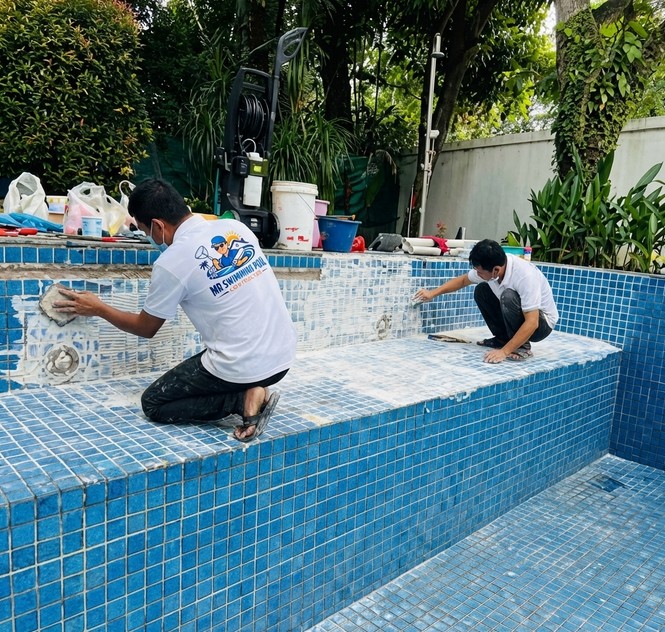
- Tiling and coping (2-3 weeks): Waterproofing, tile installation, and coping stone work. This is the most visually transformative phase.
- Equipment installation (1 week): Setting up the pump, filter, chlorinator, heater, and automation systems.
- Filling, chemical treatment, and commissioning (1 week): Filling the pool, balancing water chemistry, testing all systems, and final inspections.
Total typical timeline: 8-14 weeks from excavation to swimming, depending on pool complexity and weather conditions. Monsoon season can add 2-4 weeks due to rain delays.
Cost Factors
Pool construction costs in Malaysia vary widely based on numerous factors. Here is a realistic breakdown to help you budget:
- Basic concrete pool (3m x 6m): RM 50,000 - RM 80,000. Includes standard shape, basic tiling, standard equipment, and simple decking.
- Mid-range pool (4m x 8m): RM 80,000 - RM 150,000. Includes custom shape options, quality porcelain tiles, upgraded pump and filter, LED lighting, and landscaped surrounds.
- Premium pool (5m x 10m+): RM 150,000 - RM 350,000+. Includes infinity edge, glass mosaic tiles, spa section, water features, automation system, heating, and premium landscaping.
Factors that significantly affect cost:
- Site access: Limited access for machinery (narrow lanes, steep slopes) increases labour costs substantially
- Soil conditions: Rocky ground, high water table, or unstable soil requires additional engineering and dewatering
- Elevation changes: Hillside pools or raised pools require retaining walls and additional structural work
- Tile selection: The difference between basic ceramic and imported glass mosaic can be RM 20,000-50,000 for a standard pool
- Features: An infinity edge alone adds RM 15,000-30,000. Spa sections add RM 20,000-40,000
"Always budget an additional 10-15% contingency above the quoted price. Unexpected ground conditions, design changes, and material price fluctuations are normal in pool construction."
Choosing a Contractor
The contractor you choose will determine the quality, timeline, and overall experience of your pool construction project. Here is how to evaluate and select the right pool builder:
- Verify credentials: Ensure the contractor is registered with the Construction Industry Development Board (CIDB) and holds the appropriate grade for pool construction. Ask for their SSM registration and contractor license.
- Review their portfolio: Ask to see completed projects, ideally pools of similar size and specification to yours. Visit completed pools in person if possible -- photos can be misleading.
- Check references: Speak with at least three previous clients. Ask about the construction experience, timeline adherence, communication, and any issues that arose. Importantly, ask about after-sales service.
- Detailed quotation: A professional contractor provides an itemised quotation, not a lump sum. You should see line items for excavation, reinforcement, concrete, plumbing, electrical, tiling, equipment, coping, and finishes. Vague quotes hide surprises.
- Written contract: Never proceed without a detailed written contract specifying scope of work, materials (by brand and model), timeline with milestones, payment schedule tied to milestones, warranty terms, and penalty clauses for delays.
Red flags to watch for:
- Contractors who ask for more than 30% deposit upfront
- Significantly lower quotes than competitors (usually means cutting corners on materials or structural integrity)
- No written warranty on structural work and equipment
- Unwillingness to provide references or show completed work
- Pressure to sign immediately without time to review the contract

Have Questions About Pool Construction?
Get a free consultation and detailed quote for your dream pool. WhatsApp us to get started.
WhatsApp Us Now